Tea Sets
Japanese vs. Moroccan Tea Rituals: What Teaware You Need for Each
A kyusu with a handle on its side and a Moroccan teapot with a spout a foot long are both, technically, teapots. Put them next to each other and the differences explain almost everything about how the tea inside is meant to be made. One tradition brews small, cool and quick; the other brews big, boiling and sweet. Buy for one and you cannot really fake the other with what you already own.
What Each Ritual Asks of the Pot
Start with the job, not the object. Japanese sencha is built around several short infusions from the same leaves. That means a pot small enough to empty in one pour, a filter fine enough to hold back needle-shaped leaf, and a way to cool water well below boiling.
Moroccan mint tea is the reverse. One generous brew, boiling water, a fistful of spearmint, sugar dissolved into the pot itself, and a long arc of tea poured from height into small glasses. That calls for volume, a wide mouth, and a spout that behaves like a juggling prop.
The Japanese Side: Small Pots, Cool Water, Short Steeps
The kyusu
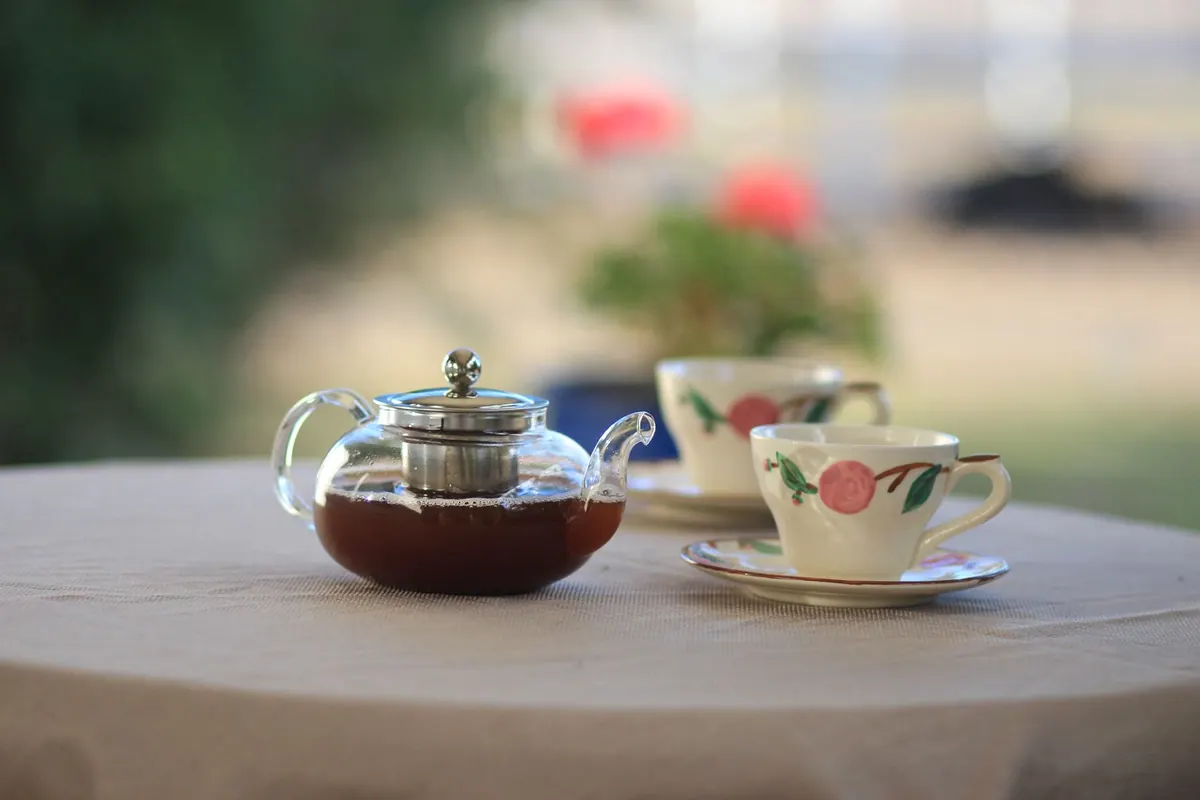
A kyusu is the everyday teapot of Japanese green tea, usually 200–350 ml, with the handle jutting out from the side of the body. That sideways handle is not decoration. It lets you pour with a small wrist movement instead of tilting your whole arm, so the pot stays level and the leaves stay settled at the bottom.
Look at the filter, because it decides what you can brew. Sasame is a ceramic screen set inside the body near the spout — gentle, traditional, best with whole-leaf sencha. A fine stainless mesh handles deep-steamed (fukamushi) sencha, which is fragile and dusty and will clog a coarse screen. A simple ceramic screen built into the spout works for light, quick pours but needs a careful flush after every session. If you drink gyokuro, go smaller still — 100–150 ml — because the steeps are tiny and the water is cooler.
The yuzamashi and hobin
A yuzamashi is a handle-less pouring bowl used to cool boiling water to roughly 70–80°C for sencha. Pour from the kettle into the yuzamashi, then into the pot. You can measure the drop with a thermometer the first few times, then learn it by feel and by the steam.
A hobin, a small pitcher, solves a different problem. When you brew for several people, the first cup gets stronger tea than the last. Decant the whole pot into the hobin, then fill each cup from it. Even strength, every time, and the leaves stop stewing the moment the pot is empty.
Japanese Cups and the Pouring Rhythm
Yunomi are the tall, handle-less cups you see with sencha — 100–150 ml, wider at the rim than the base, thin-walled so the tea cools fast enough to drink. Handle-less means you hold the cup with your fingers around the body and your thumb near the rim. Small guinomi-style cups suit gyokuro, where a few sips is the whole serving.
The rhythm matters as much as the gear:
- Warm the pot and cups with hot water, then discard it.
- Add roughly a teaspoon of leaf per 200 ml — more if you like it bracing.
- Pour cooled water over the leaf and steep about a minute.
- Empty the pot completely into the hobin or cups.
- Steep again, slightly hotter and shorter, then a third time.
Add a wooden tray and a few chataku coasters and you have a complete setup. No sugar bowl, no milk jug, no strainer at the table — the filter lives in the pot.
The Moroccan Side: One Big Pot, a Long Spout, Plenty of Sugar
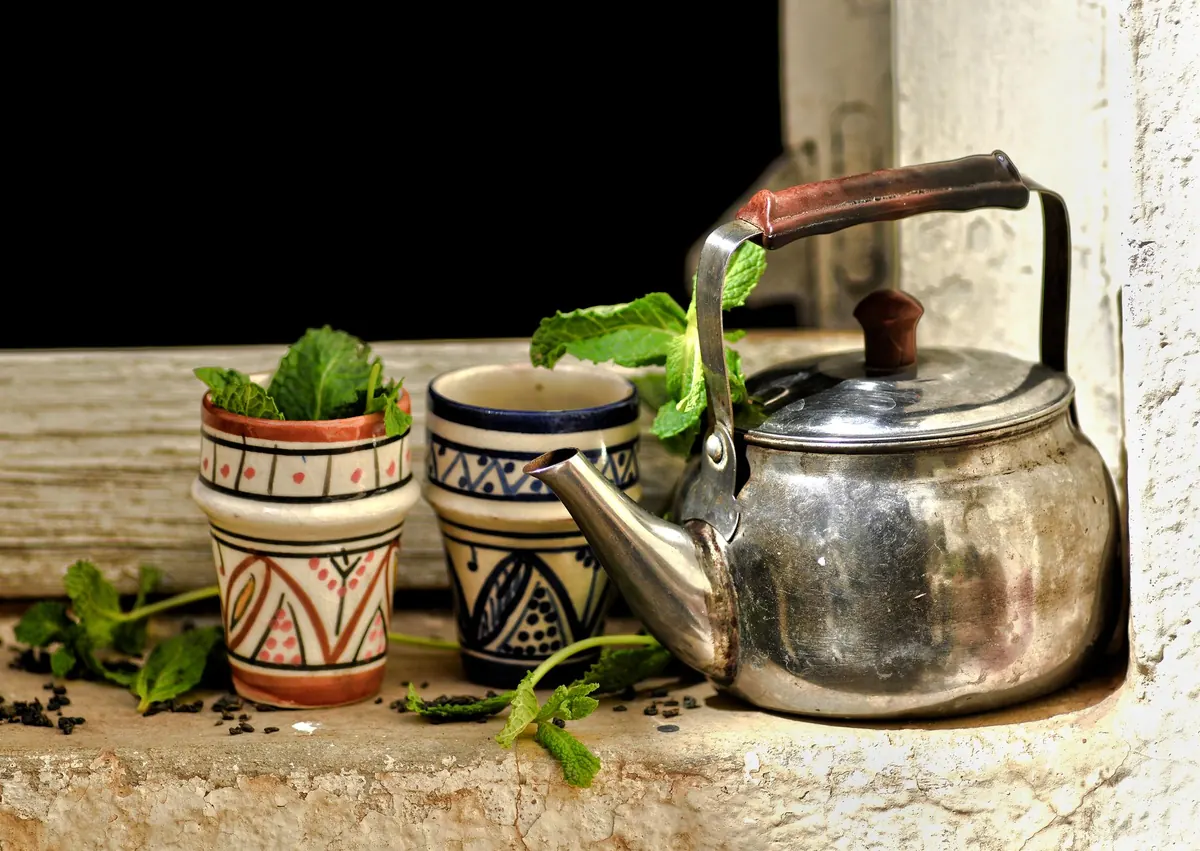
Moroccan mint tea is gunpowder green tea, fresh spearmint and sugar, brewed in a pot of 0.7–1.5 litres. Stainless steel is the workhorse material: it takes boiling water, it survives being knocked against a tray, and it keeps the tea hot on a table where people linger for an hour.
The spout is the signature. It curves out long and thin, which lets you pour a steady stream from a good height without splashing. Many pots have a removable domed lid and a wide mouth so you can get a hand, a bunch of mint and a chunk of sugar inside, plus a small screen at the base of the spout to catch leaves. Silver, nickel-silver and brass versions exist for serving; if you buy one, check that the interior is safe for food use and lined or solid rather than plated onto a reactive metal.
The usual method: rinse the gunpowder briefly with a little boiling water and pour that water away to soften the leaf and lose some bitterness. Add fresh boiling water, let it steep a few minutes, then drop in mint and sugar. Many households use two pots — brew in one, strain into the second once the strength is right, then pour back and forth a couple of times to mix and aerate. Adjust the sugar to your own taste. If you are watching your blood sugar, it is worth asking a doctor or dietitian how much sweetened tea fits your situation.
Glasses, Trays and the Height of the Pour
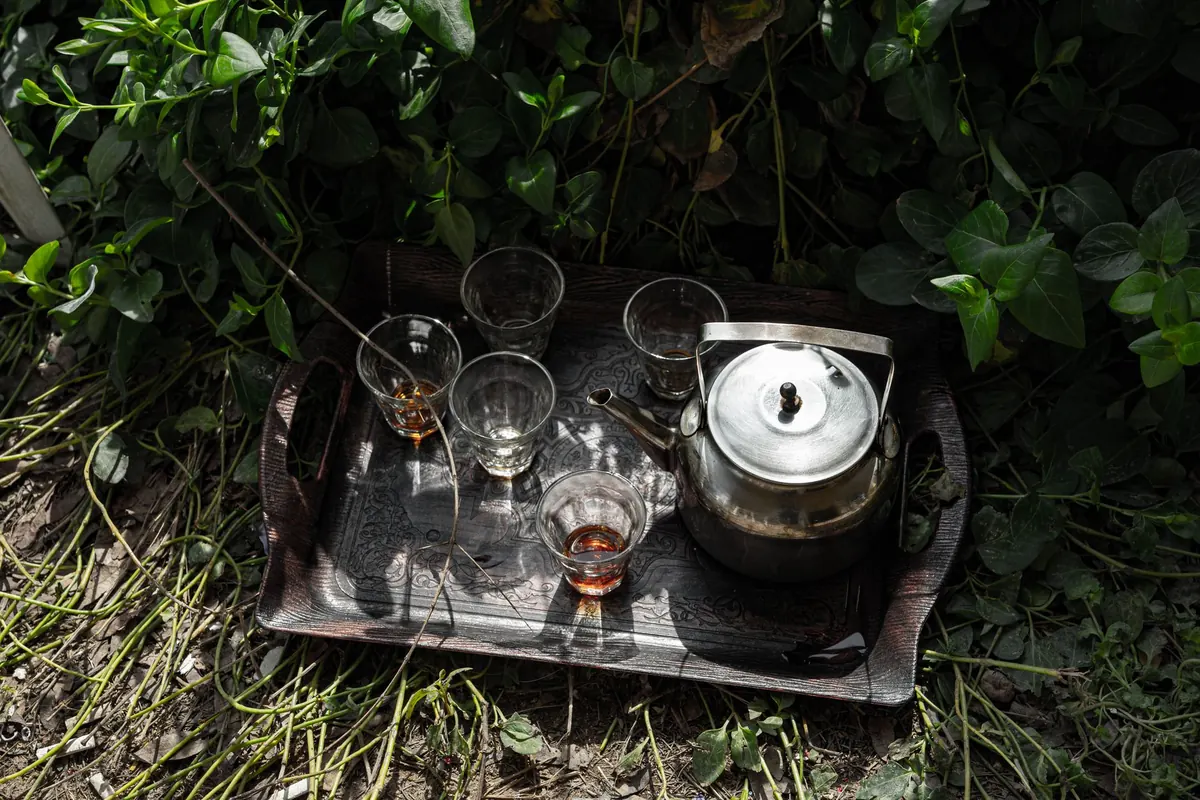
Moroccan tea is drunk from small decorated glasses, often 150–200 ml, gilt with patterns and narrow enough that you can pinch the rim with two fingers without burning yourself. They are meant to be seen: amber tea, a ring of foam on top, gold pattern catching the light. The tray underneath is a large round metal one, hammered or engraved, big enough for the pot, the glasses and the drips.
Pouring from height is the move that ties it together. Holding the pot well above the glass — a foot or more once you are confident — aerates the tea and builds a crown of foam. Practise with water in the sink first, over a tray, pouring in one steady stream and stopping before the glass is full. A spout cap or a slight downward flick of the wrist at the end keeps the table dry.
Side-by-Side Checklist
- Japanese sencha: kyusu, 200–350 ml, side handle, fine filter
- Japanese sencha: yuzamashi or a second pot for cooling water
- Japanese sencha: hobin pitcher for even pouring
- Japanese sencha: two to four yunomi, 100–150 ml, handle-less
- Japanese sencha: wooden tray, chataku coasters, a small caddy for leaf
- Moroccan mint: steel teapot, 0.7–1.5 L, long curved spout, wide mouth
- Moroccan mint: fine strainer, or a pot with a built-in spout screen
- Moroccan mint: four to six decorated glasses, 150–200 ml
- Moroccan mint: large round metal tray, plus a burner or samovar for hot water at the table
- Moroccan mint: gunpowder green tea, fresh spearmint, sugar
If You Are Buying Your First Set
Pick the ritual you will actually repeat. For Japanese tea, one 300 ml kyusu with a fine mesh filter and a pair of yunomi covers most mornings; add a yuzamashi later if you find yourself waiting impatiently for the kettle to cool. For Moroccan tea, one litre of stainless steel, a strainer, a tray and six glasses is a full setup that will serve a room.
Resist mixing them. A Moroccan pot makes sencha badly: too much water for the leaf, and the steam-scorched green turns bitter before you finish pouring. A kyusu makes Moroccan tea badly too — the fine filter clogs with mint, and you would need four of them to fill one glass.
If you want to experiment before committing, work with what you have. Steep sencha in a mug with a fine strainer and water that has sat off the boil for a few minutes. Simmer Moroccan tea in a small saucepan, strain it into any pitcher, and pour it high into a tumbler. The pots matter, but the timing and the pour matter more.
Photo: Moussa Idrissi / Pexels
Related Articles