Tea Sets
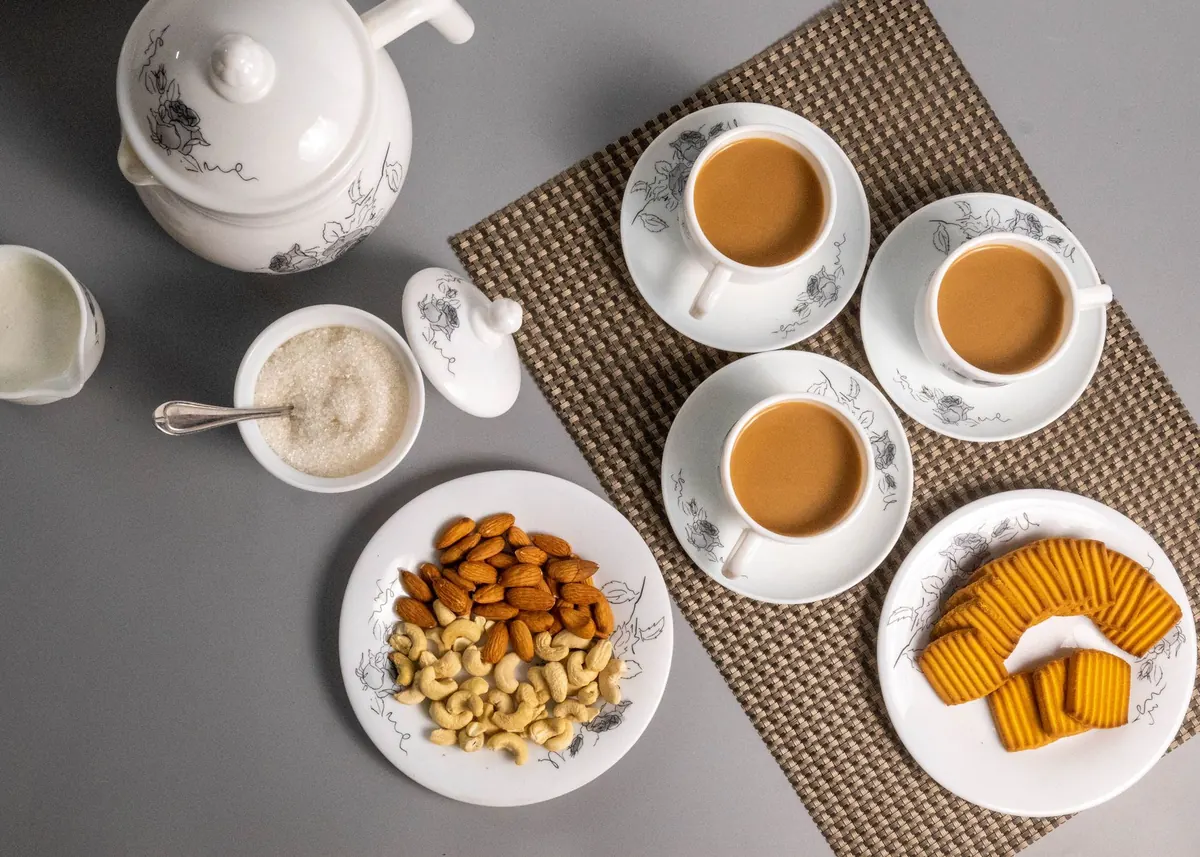
The First-Time Tea Set Buyer's Checklist: 12 Things to Check Before You Buy
A tea set looks like an easy purchase. Then you're standing in front of a shelf of boxes that all seem identical, or scrolling a listing where every set claims to be "classic" and "elegant." Six months later, half of those sets sit at the back of a cupboard — not because they were badly made, but because the cups hold five ounces, the infuser is annoying to rinse, or the saucers rock on the table. None of that is difficult to avoid. You just need to know what to look at before you pay. Here are twelve checks, roughly in the order they start to matter.
Cup Capacity and Cup Count: Start With How You Actually Pour
Begin with the cup, since it's the piece you'll touch twice a day. Look for a stated capacity in millilitres or ounces — and read it carefully, because rim-to-brim volume is always more generous than what you'd realistically pour. A traditional Western teacup often holds around 150–200 ml (5–7 oz). Mug-style sets run closer to 300 ml or more.
If you drink tea from a big mug all morning, a delicate 150 ml cup means two or three refills per sitting. That's fine for a slow weekend pot, less fine on a workday. Measure the mug you already love: fill it to your usual level, pour that water into a measuring jug, and write the number down. That number is your target.
Then count cups. Sets come as pairs, fours, sixes, or a service for six with a matching pot. Check the pot-to-cup math too. A 600 ml pot fills roughly three 200 ml cups, and if the pot holds an infuser basket, the leaves and basket take up room, so usable capacity is a little lower than advertised.
Material: What You're Really Holding Every Morning
Material determines weight, heat retention, and how careful you'll have to be. Each has a trade-off:
- Porcelain. Thin walls, bright white surface, shows tea colour well. Rim chips are the main risk.
- Bone china. Lighter and slightly translucent, often warmer to hold. Usually the priciest option and the most fragile at the edges.
- Stoneware. Heavier, rustic, holds heat well. Bulkier in the hand and in the cupboard; check the weight before committing to a six-cup set.
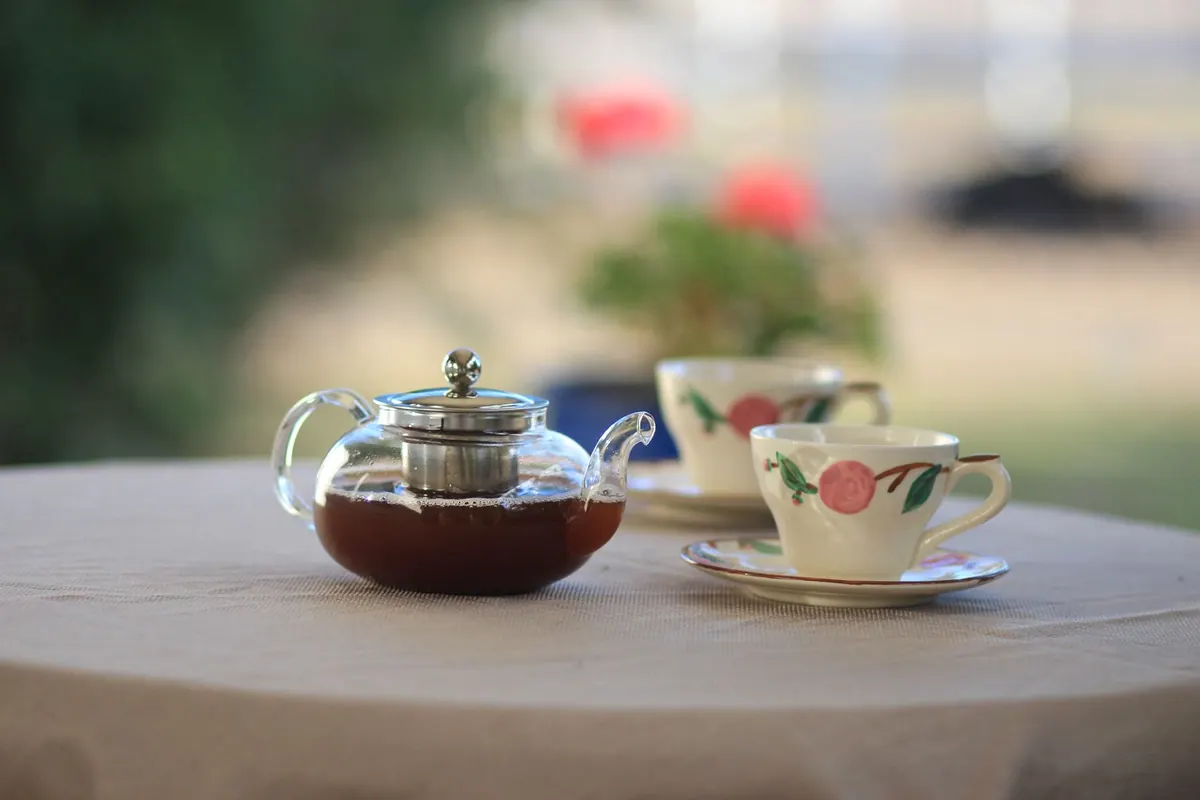
- Glass. Beautiful for watching leaves unfurl, but it transfers heat to your fingers fast and needs gentle handling.
- Cast iron or unglazed clay. Typically teapots rather than full sets. Cast iron is heavy and needs thorough drying; unglazed clay absorbs flavour, so dedicate it to one type of tea.
On glazed ceramics from an unfamiliar seller, look for a food-safe or lead-free statement in the listing. If it isn't there, ask. Reputable makers will answer without hesitation.
Infuser Type: The Choice Most Buyers Rush
This is where a good-looking set quietly fails. Loose leaves need room to open; when they expand, they can double or triple in size. Cram them into a small mesh ball and you get a bitter, flat cup no matter how good the tea is.
The common options, in rough order of convenience: a removable stainless basket (easy to lift out and rinse); a built-in ceramic strainer set into the base of the spout (traditional and charming, but it clogs with fine leaves); a mesh ball or infuser spoon (cheap, compact, best for a single cup); and no infuser at all, which means pouring through a separate strainer — lovely for gongfu-style brewing, more fuss for everyday use. Whatever you choose, make sure the removable parts genuinely come out and go back easily with wet hands.
Saucer Fit, Handle, Spout, and Lid
Four small physical details separate a set you'll enjoy from one you'll tolerate. Set the cup on its saucer and press the rim gently — any rock or wobble means the saucer's well is too shallow or the cup's foot is uneven. A cup should sit flat and centred.
Wrap your fingers through the handle. Two fingers plus a knuckle of clearance is comfortable; a tight loop means burnt fingertips when the tea is hot. Check the spout by looking at the lip — a clean, sharp edge pours without dribbling, while a thick rounded one tends to run down the outside. Finally, tip the pot: the lid should stay put when you pour and should have a small vent hole so the flow doesn't glug. Some lids sit in a notch or come with a tether; both are worth having.
Dishwasher Safety and Other Care Realities
Dishwasher-safe is not a single yes-or-no answer. Gold or metallic trim, hand-painted decals, and unglazed clay all suffer in a dishwasher, even when the listing says the set is machine washable. High heat and harsh detergent dull the shine and eventually lift the decoration.
Anything with a delicate rim is safer washed by hand. For microwave use, no metal trim and no metal parts, ever. And mind thermal shock: don't pour boiling water into a cold glass pot or a chilled cup. Warm it with a splash of hot water first. That one habit prevents most cracking.
The Hands-On Checks: Two Minutes, Five Steps
- Fill the cup to the level you'd actually drink from and see how it feels in your hand.
- Set the cup on the saucer and press each side gently — no rocking.
- Slide two fingers through the handle and imagine lifting a full cup.
- Pour water from a full pot and watch the last few drops at the spout.
- Take apart every removable piece and put it back together while your hands are wet.
Before You Click Buy
Buying online removes the touch test, so lean on photos and specifics. Look for a listing that states capacity in ml or oz, shows the pot next to a cup for scale, confirms whether the infuser is removable, and lists care instructions in plain language. Check the count: "service for six" sometimes means six cups and saucers plus a pot, and sometimes six cups only. Confirm the return policy, since chips in transit are the most common disappointment.
If you buy only one set to start, choose capacity you'll use daily, porcelain or stoneware that suits your cupboard space, and a removable basket infuser. Those three decisions cover most of what makes a set earn its place on the shelf rather than in the back of it.
Photo: Kafeel Ahmed / Pexels
Related Articles