Accessories
7 Common Tea Brewing Mistakes That Make Good Tea Taste Bad
Good tea is expensive, or at least it feels that way when a tin you were looking forward to tastes like wet cardboard. Most disappointing cups are not the tea's fault. They come from a handful of small habits: water that is too hot, leaves that sit too long, a strainer that lets dust through. None of these need new equipment or a course. They need you to notice what you are doing and change one or two moves. Here are the errors that quietly ruin good leaf, and how to stop making them.
1. Letting the Leaves Steep Too Long
Oversteeping is the most common mistake in home brewing. Tea does not release flavour all at once. First come the bright, sweet, aromatic compounds. Then the tannins arrive, and with them the astringency and bitterness you cannot undo. Two minutes and five minutes with the same tea give you two completely different drinks.
Set a timer for the next few weeks, even if it feels fussy. When you find the time that works, write it on the tin. Whole-leaf teas forgive a little lateness; broken leaves and bagged dust go harsh in under a minute.
If a cup already went bitter, do not throw the leaves away. Shorten the next infusion by thirty seconds and pour it sooner. Bitterness does not rinse out of a cup; it only gets diluted.
2. Using Water That's Too Hot (or Too Cool)
Green tea hit with rolling boiling water tastes like cooked spinach. You lose the sweetness and the fresh vegetal notes that made you buy it. Black teas and herbal blends, on the other hand, often taste thin and sour when brewed too cool, because the water never fully opens the leaf.
A rough temperature guide
- White and green tea: 70–80°C (160–175°F)
- Yellow tea and light oolong: 80–85°C
- Darker oolong and black tea: 90–95°C
- Pu-erh, rooibos and herbal blends: 95–100°C
No thermometer on the counter? Boil the kettle, then let it stand with the lid open for two or three minutes. Pouring water from the kettle into a pitcher and back into the kettle drops the temperature several degrees with each transfer and works just as well. Avoid boiling the same water down over and over; repeatedly boiled water tastes flat and dull, and no amount of good leaf will hide it.
3. Straining Badly, or Not at All
Both ends of the strainer spectrum cause problems. A wide-mesh basket lets fragments and dust straight into your cup, where they keep steeping and turn the last few sips harsh. A very fine mesh clogs, slows the pour, and effectively extends the brewing time while the leaves sit in water.
The bigger issue is what happens after the timer ends. If the leaves stay in the pot or in a basket sitting in your mug, they keep extracting. Lift the basket out and rest it on a saucer. If you brew in a pot with no removable infuser, pour the whole thing through a strainer into a second pot or a thermos instead of leaving the final third sitting on the leaf.
Also check that your strainer actually seats in the pot's rim. Gaps let leaves escape, and you end up with a cup that gets stronger as you drink it.
4. Guessing the Leaf-to-Water Ratio
"One teaspoon per cup" is a starting point, not a rule. Volume is a poor measure for tea. A teaspoon of tightly rolled oolong weighs noticeably less than a teaspoon of broken black tea, and a teaspoon of fluffy white tea weighs less than both. Follow a volume scoop and your cups swing from weak to harsh and back again with no obvious reason.
Weigh the leaves once, and the guesswork disappears. A small kitchen scale is the most useful tea accessory you can own, and it costs less than a decent tin of oolong. Start at roughly one gram per 100 ml of water — call it two to three grams for a standard 250 ml mug — then adjust up or down to taste.
If you brew gongfu style, use five to seven grams per 100–120 ml and keep the infusions short, thirty seconds or less for the first pour. The classic trap is under-leafing and then oversteeping to compensate. Weak tea forced to be strong tastes thin and bitter at the same time.
5. Ignoring the Water Itself
Tea is almost entirely water, so if your tap water smells of chlorine or is very hard, your tea will carry that too. Filtered water is a simple, worthwhile improvement. Heavily softened or distilled water has the opposite problem: it tastes flat and hollow, and the tea comes out lifeless.
Draw fresh water each time you brew. Water that has sat in the kettle overnight picks up stale, metallic notes, and water boiled down to half its volume concentrates minerals you do not want. Fill, boil once, pour.
6. Storing Tea Where It Shouldn't Be
Tea takes on the world around it. Light, heat, air, moisture and strong smells all strip the aromatics that make a tea worth drinking. A tin on a sunny windowsill or a bag tucked beside the coffee grinder will taste of exactly that within weeks.
Keep it airtight, opaque, cool and dry, well away from spices, coffee and cleaning supplies. Buy in amounts you will finish in a few months rather than stocking up on a favourite. Skip the refrigerator unless you have a genuinely sealed container and you let the tea come to room temperature before opening it, since condensation inside the tin ruins leaf faster than room temperature ever will.
Signs the tea has already faded
- A dusty, papery smell instead of a fresh one
- Dull, grey-green or muddy brown leaf colour
- Flat aroma in the cup, with no sweetness at the front
- Full flavour that vanishes after the first sip
7. Brewing in a Cold Pot
A cold ceramic teapot pulls heat out of the water the moment it hits the leaves. The first infusion ends up cooler than you intended, which under-extracts the delicate aromatics and leaves you with a bland, slightly sour cup. Fill the pot and the cups with hot water, let them stand for thirty seconds, then empty them before you add the leaf.
Material changes the maths too. Thin porcelain sheds heat quickly, while thick clay and cast iron hold it. If you use a large glass pot with only a small amount of tea inside, preheat it and consider a tea cosy. Most of all, match the pot to the batch: brewing three grams in a litre pot guarantees lukewarm, weak tea, no matter how careful you are with everything else.
A Short Checklist Before Your Next Cup
Pick one change at a time. Adjusting everything at once makes it impossible to know what helped.
- Weigh the leaves instead of scooping them.
- Check the water temperature before it touches the tea.
- Set a timer, and trust it over your memory.
- Remove the leaves the moment the time is up.
- Preheat the pot and the cup.
- Taste, and note what you would change next time.
Do that for a week and your tea will taste like the tea you paid for. The leaf was never the problem.
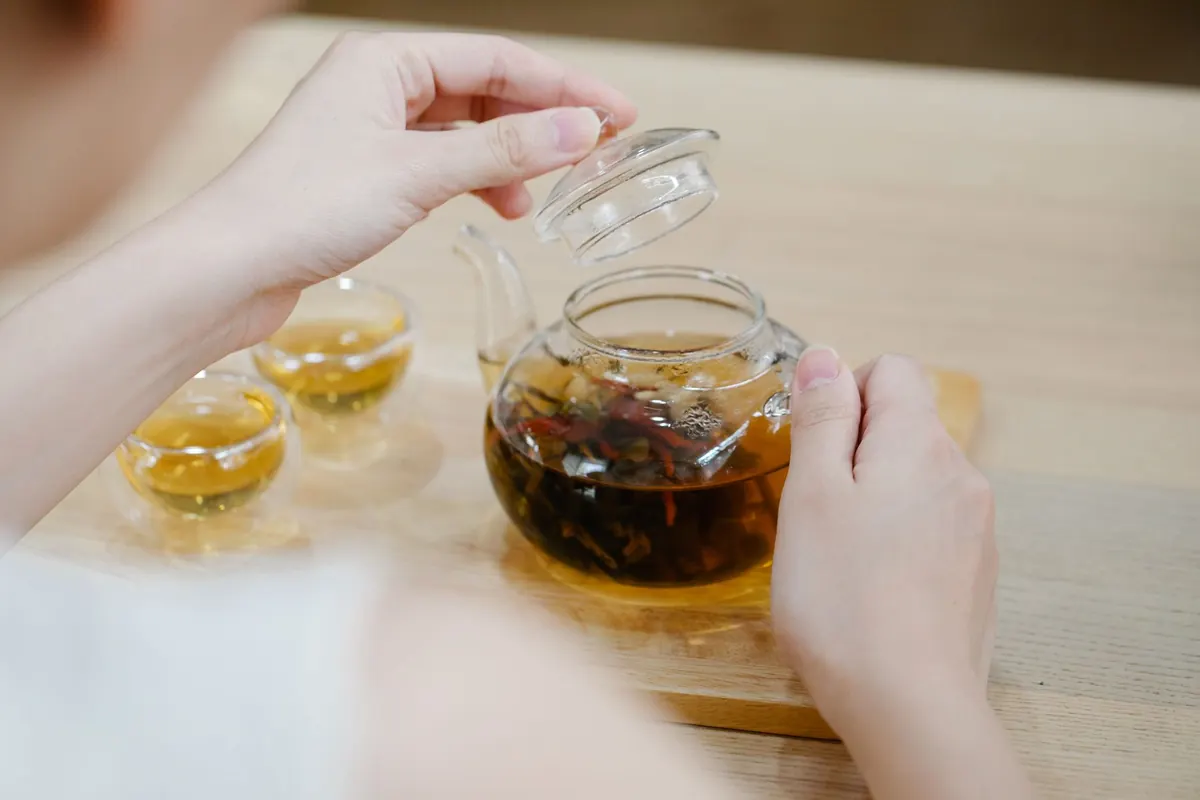
Photo: Anna Pou / Pexels
Related Articles